The Complete Guide to Two-Way Radio Hire for Events 2026
The Complete Guide to Two-Way Radio Hire for Events (2026)
Reliable Event Communication Starts with the Right Setup
No matter the size of your event, clear communication is one of the most important parts of keeping everything running smoothly.
From festivals and sporting events to conferences, exhibitions, and live productions, event teams rely on fast, dependable communication to coordinate staff, manage safety, respond to issues quickly, and keep operations organised.
While mobile phones still have their place, two-way radios continue to be the preferred communication tool for many event organisers in 2026 because they are simple, instant, and reliable.
Why Events Still Use Two Way Radios in 2026
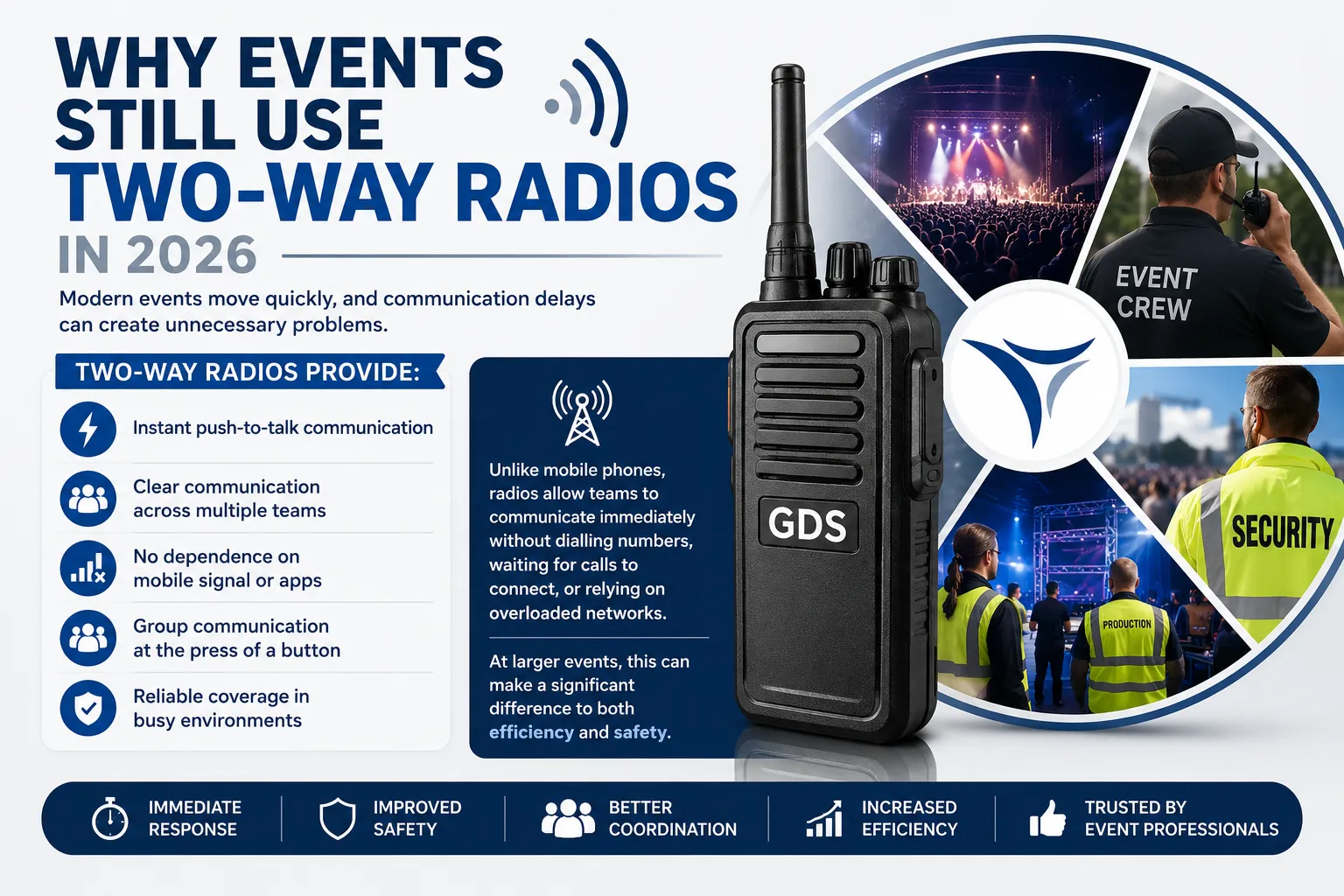
Modern events move quickly, and communication delays can create unnecessary problems.
Two-way radios provide:
- Instant push-to-talk communication
- Clear communication across multiple teams
- No dependence on mobile signal or apps
- Group communication at the press of a button
- Reliable coverage in busy environments
Unlike mobile phones, radios allow teams to communicate immediately without dialling numbers, waiting for calls to connect, or relying on overloaded networks.
At larger events, this can make a significant difference to both efficiency and safety.
What Types of Events Use Radio Hire?
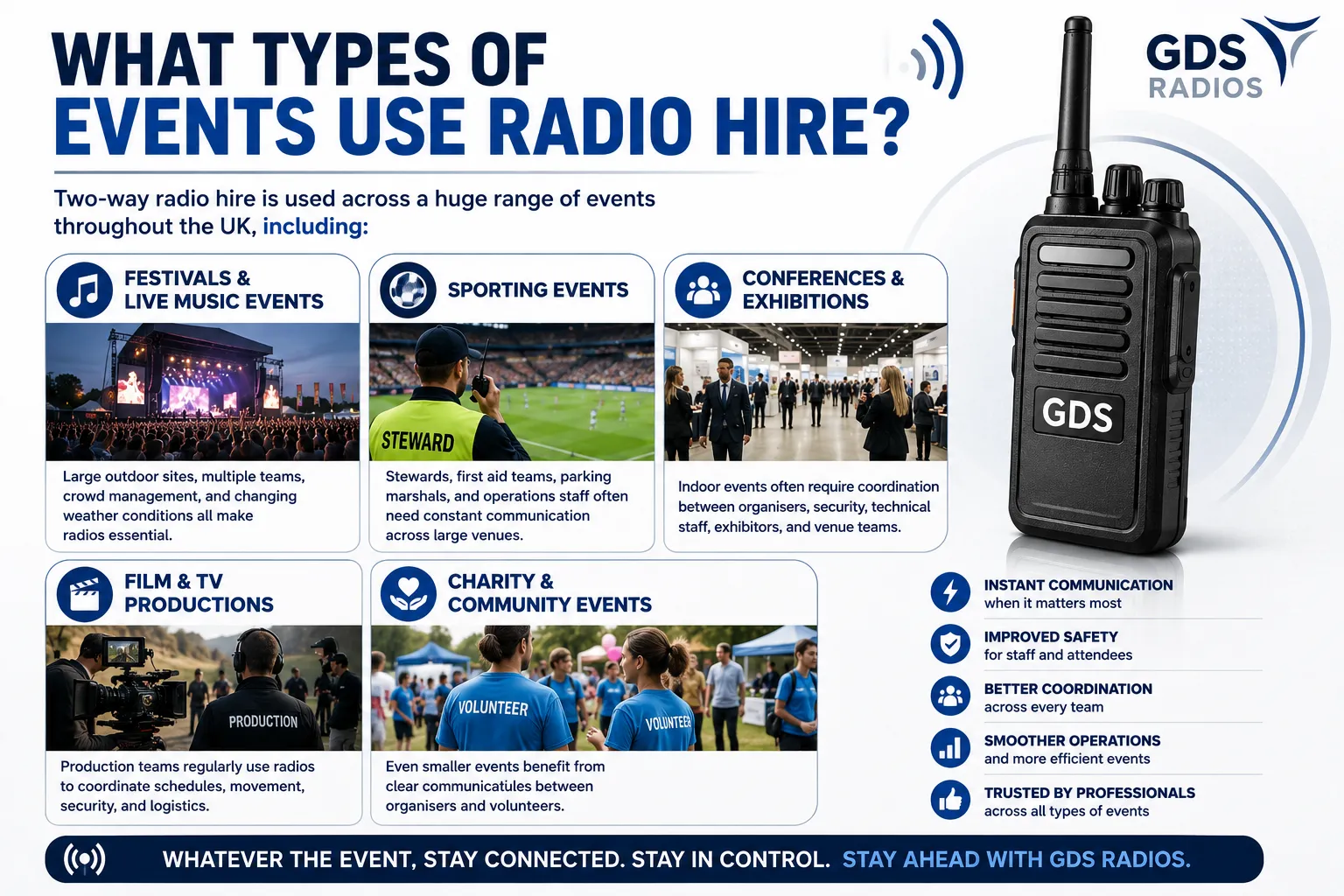
Two way radio hire is used across a huge range of events throughout the UK, including:
Festivals & Live Music Events
Large outdoor sites, multiple teams, crowd management, and changing weather conditions all make radios essential.
Sporting Events
Stewards, first aid teams, parking marshals, and operations staff often need constant communication across large venues.
Conferences & Exhibitions
Indoor events often require coordination between organisers, security, technical staff, exhibitors, and venue teams.
Film & TV Productions
Production teams regularly use radios to coordinate schedules, movement, security, and logistics.
Charity & Community Events
Even smaller events benefit from clear communication between organisers and volunteers.
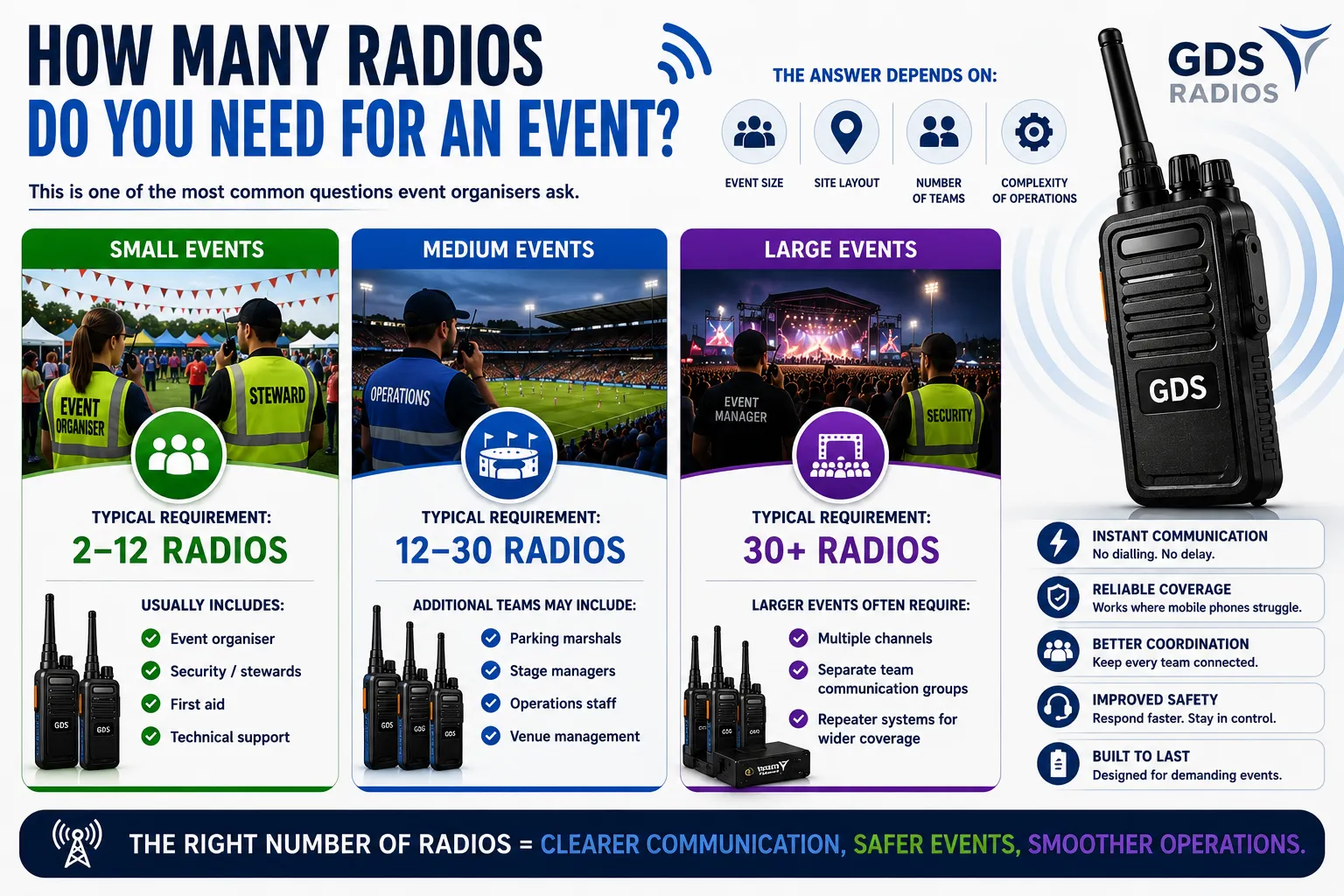
How Many Radios Do You Need for an Event?
This is one of the most common questions event organisers ask.
The answer depends on:
- Event size
- Site layout
- Number of teams
- Complexity of operations
Small Events
Typical requirement:
2–12 radios
Usually includes:
- Event organiser
- Security / stewards
- First aid
- Technical support
Medium Events
Typical requirement:
12–30 radios
Additional teams may include:
- Parking marshals
- Stage managers
- Operations staff
- Venue management
Large Events
Typical requirement:
30+ radios
Larger events often require:
- Multiple channels
- Separate team communication groups
- Repeater systems for wider coverage
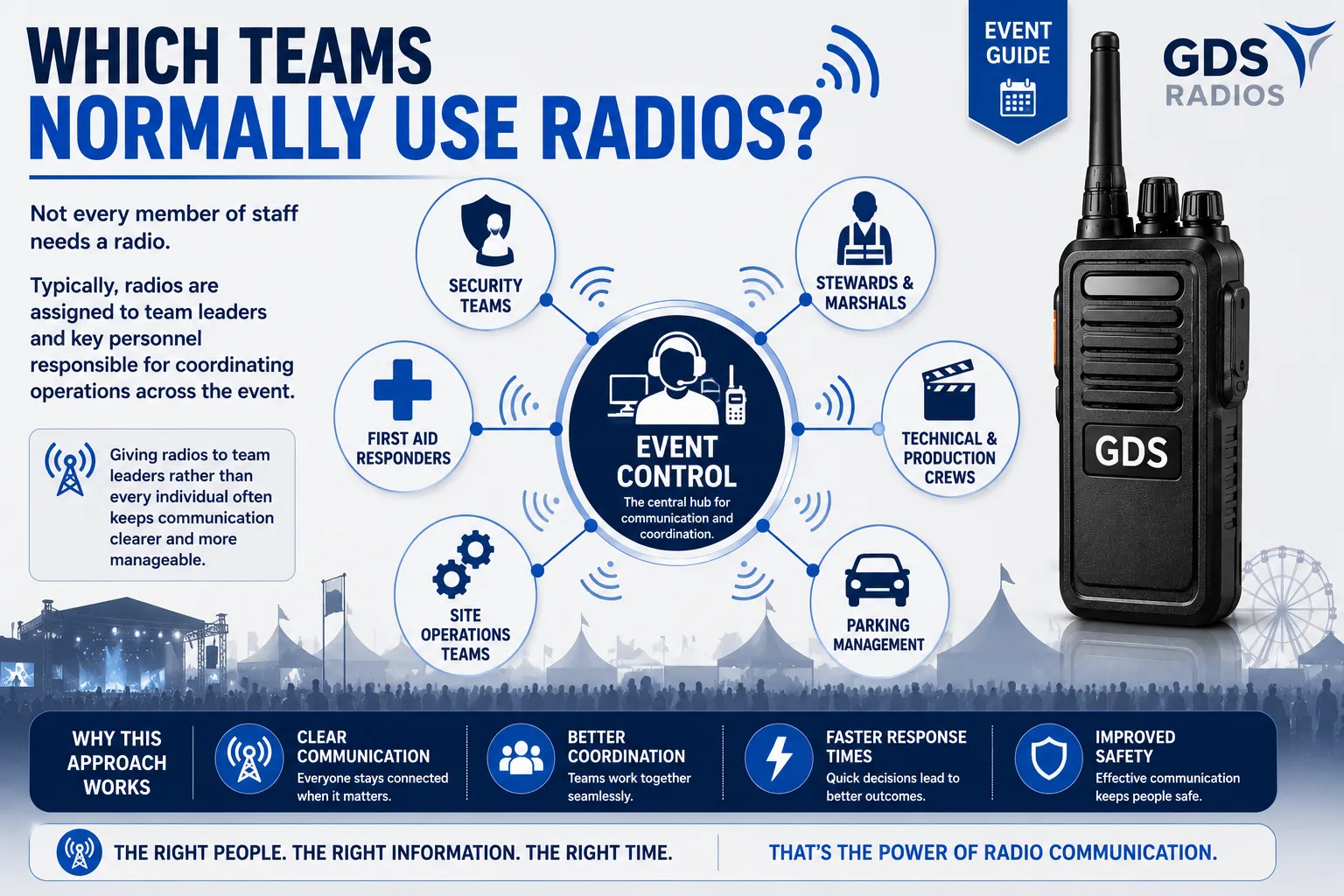
Which Teams Normally Use Radios?
Not every member of staff needs a radio.
Typically, radios are assigned to:
- Event control
- Security teams
- Stewards and marshals
- First aid responders
- Technical and production crews
- Site operations teams
- Parking management
Giving radios to team leaders rather than every individual often keeps communication clearer and more manageable.
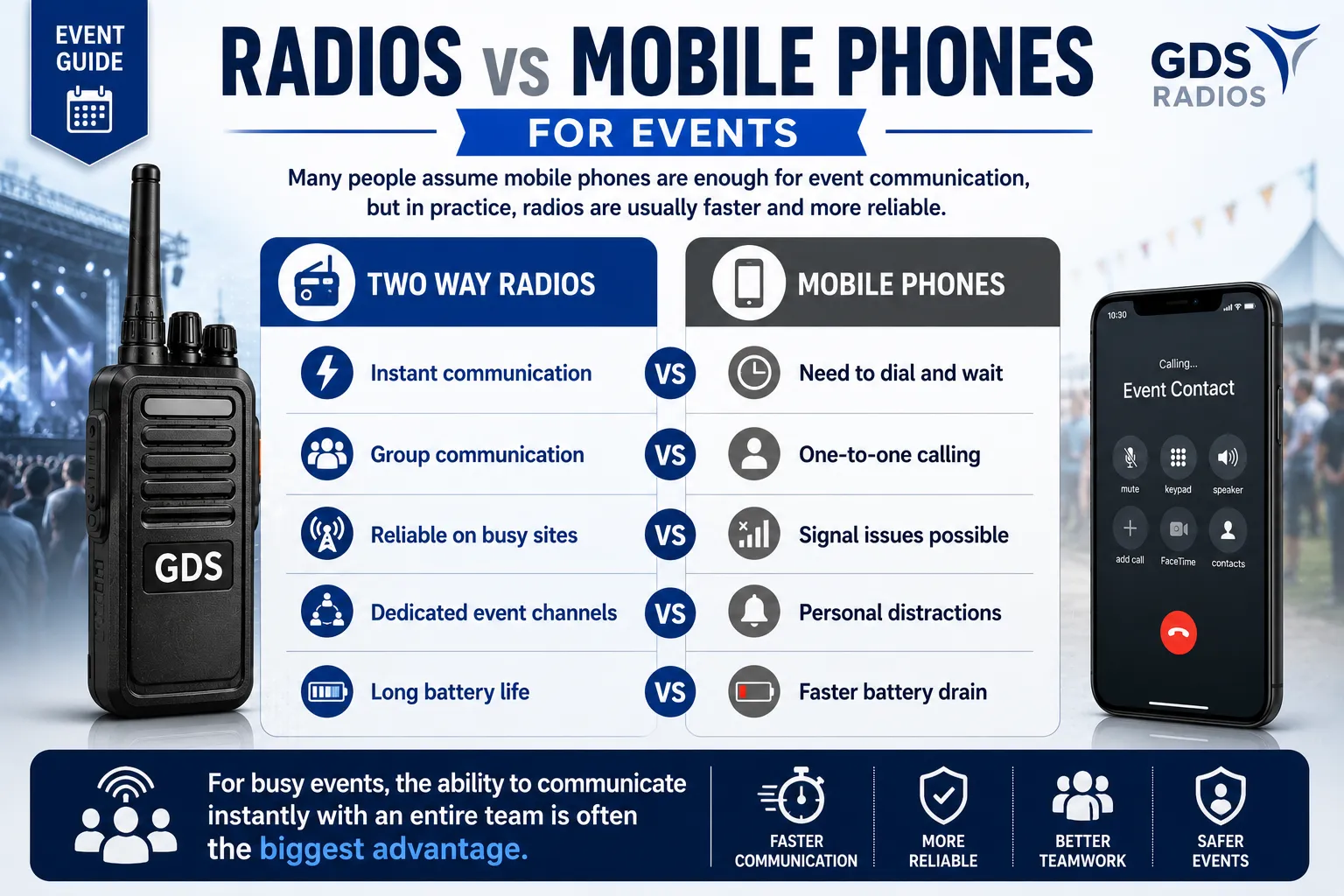
Radios vs Mobile Phones for Events
Many people assume mobile phones are enough for event communication, but in practice, radios are usually faster and more reliable.
| Two-Way Radios | Mobile Phones |
| Instant communication | Need to dial and wait |
| Group communication | One-to-one calling |
| Reliable on busy sites | Signal issues possible |
| Dedicated event channels | Personal distractions |
| Long battery life | Faster battery drain |
For busy events, the ability to communicate instantly with an entire team is often the biggest advantage.
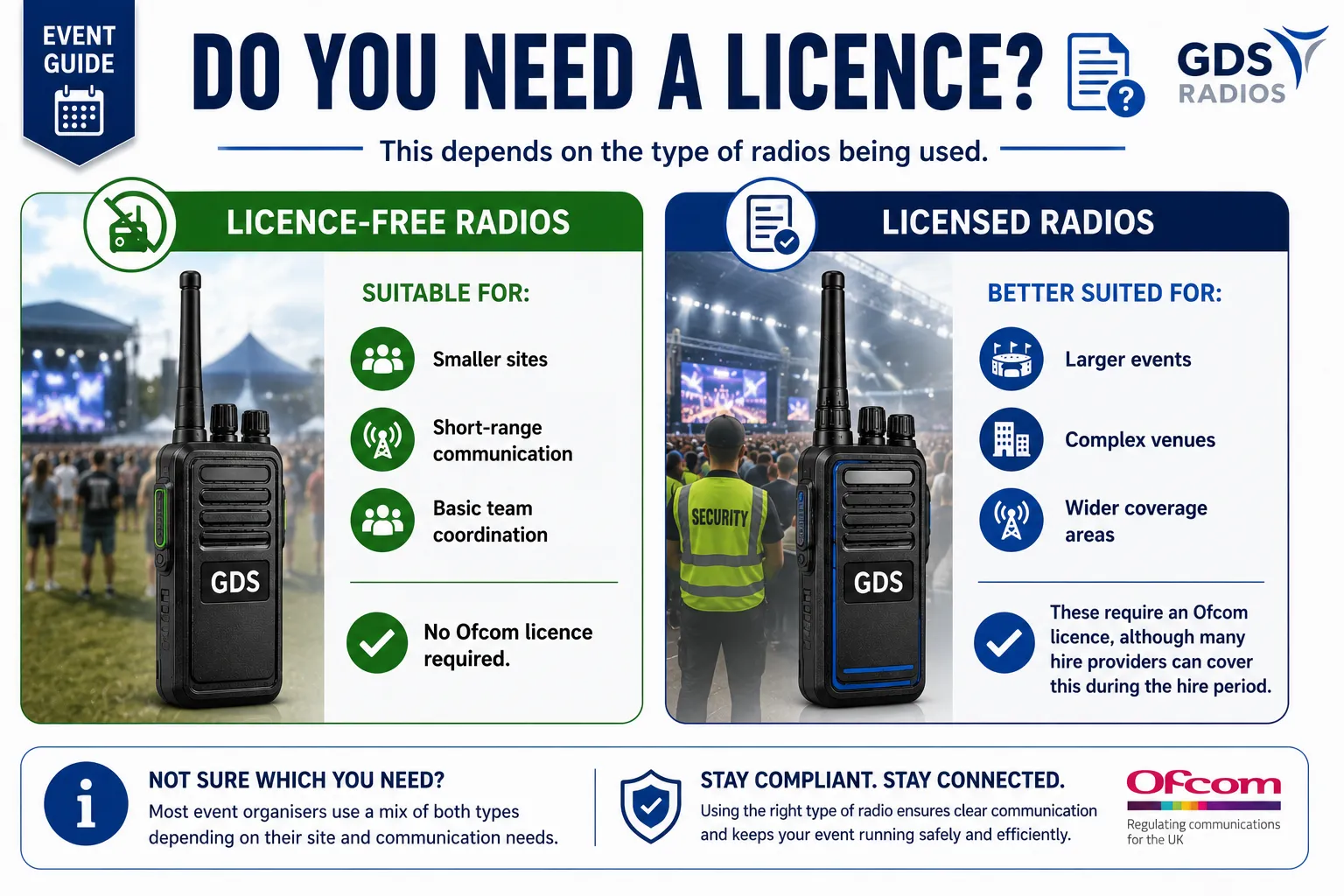
Do You Need a Licence?
This depends on the type of radios being used.
For hire equipment, most hires are covered under our existing hire licence. However, dedicated frequencies can also be arranged if your project or event requires them.
We’ll advise you on the best and most suitable option for your requirements.
Licence-Free Radios
Suitable for:
- Smaller sites
- Short-range communication
- Basic team coordination
No Ofcom licence required.
Licensed Radios
Better suited for:
- Larger events
- Complex venues
- Wider coverage areas
These require an Ofcom licence, although many hire providers can cover this during the hire period.
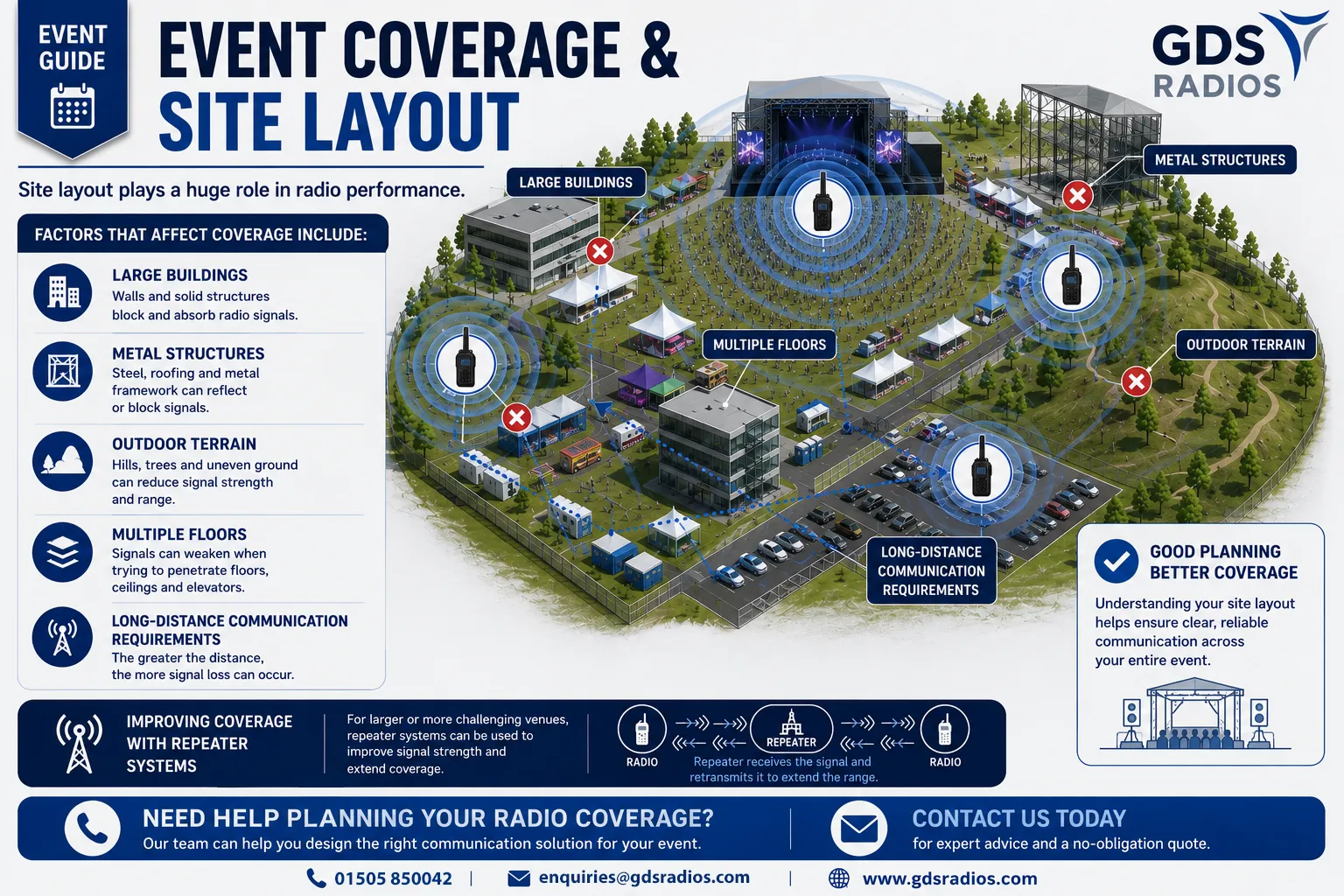
Event Coverage & Site Layout
Site layout plays a huge role in radio performance.
Factors that affect coverage include:
- Large buildings
- Metal structures
- Outdoor terrain
- Multiple floors
- Long-distance communication requirements
For larger or more challenging venues, repeater systems can be used to improve signal strength and extend coverage.
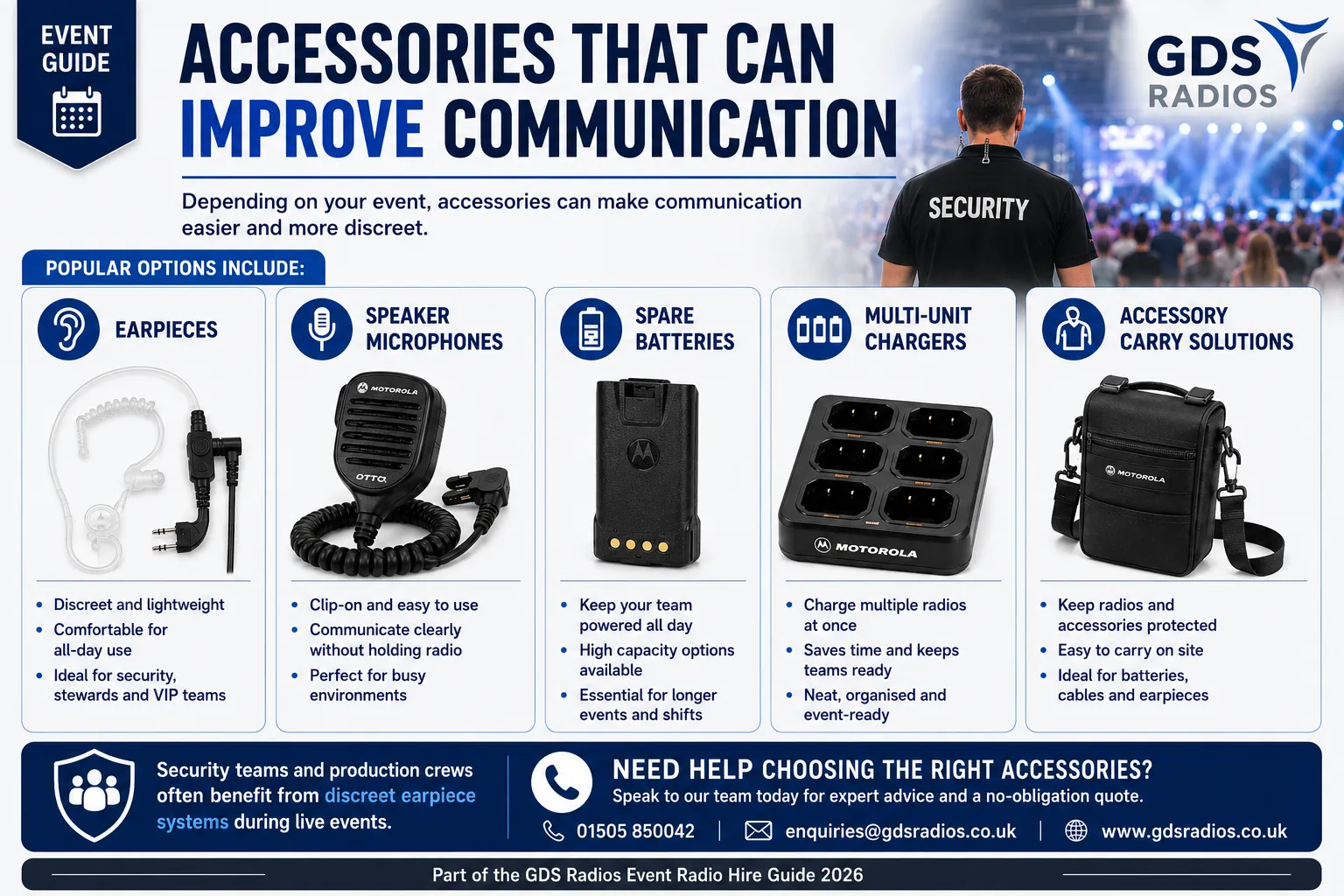
Accessories That Can Improve Communication
Depending on your event, accessories can make communication easier and more discreet.
Popular options include:
- Earpieces
- Speaker microphones
- Spare batteries
- Multi-unit chargers
Security teams and production crews often benefit from discreet earpiece systems during live events.
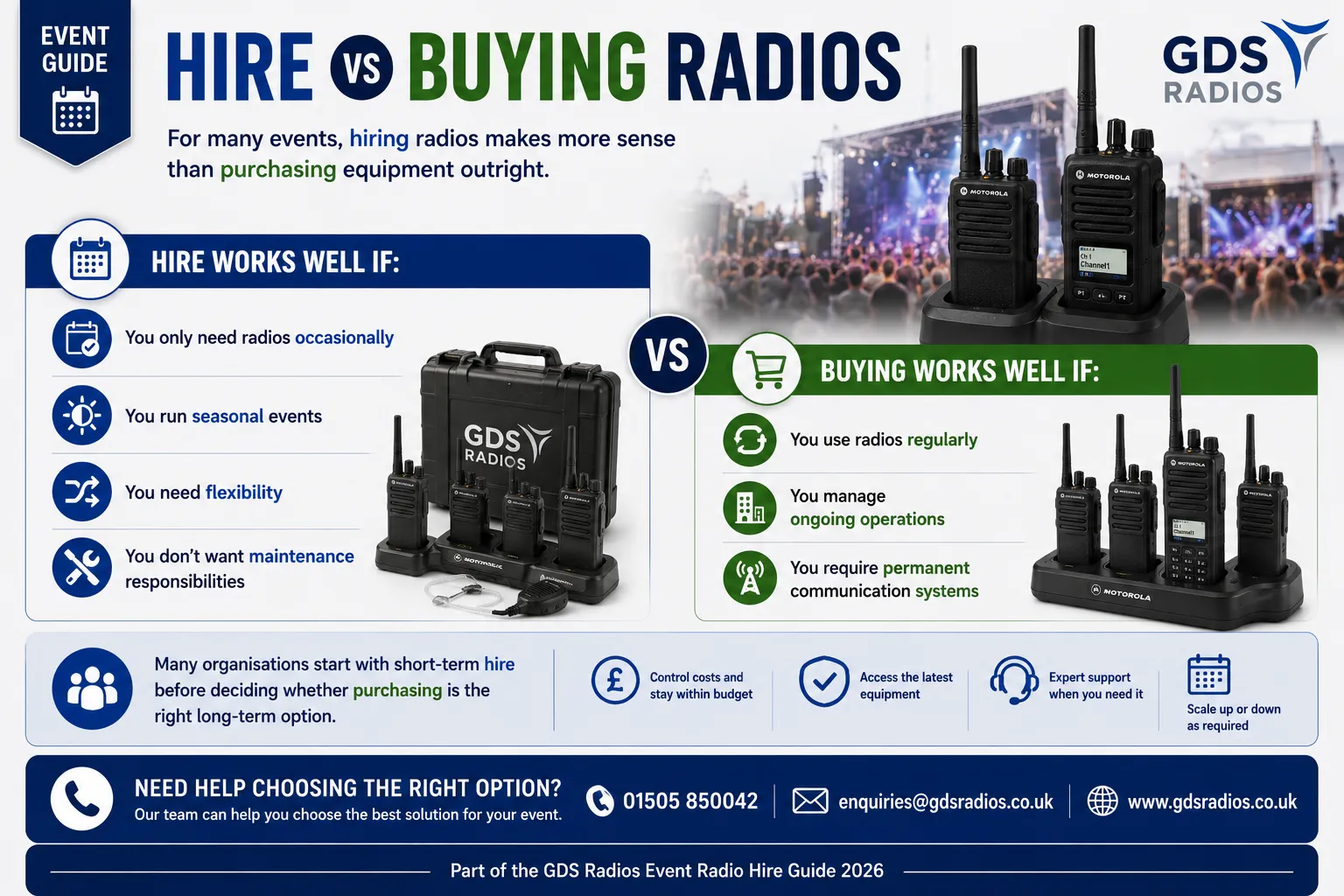
Hire vs Buying Radios
For many events, hiring radios makes more sense than purchasing equipment outright.
Hiring Works Well If:
- You only need radios occasionally
- You run seasonal events
- You need flexibility
- You don’t want maintenance responsibilities
Buying Works Well If:
- You use radios regularly
- You manage ongoing operations
- You require permanent communication systems
Many organisations start with short-term hire before deciding whether purchasing is the right long-term option.
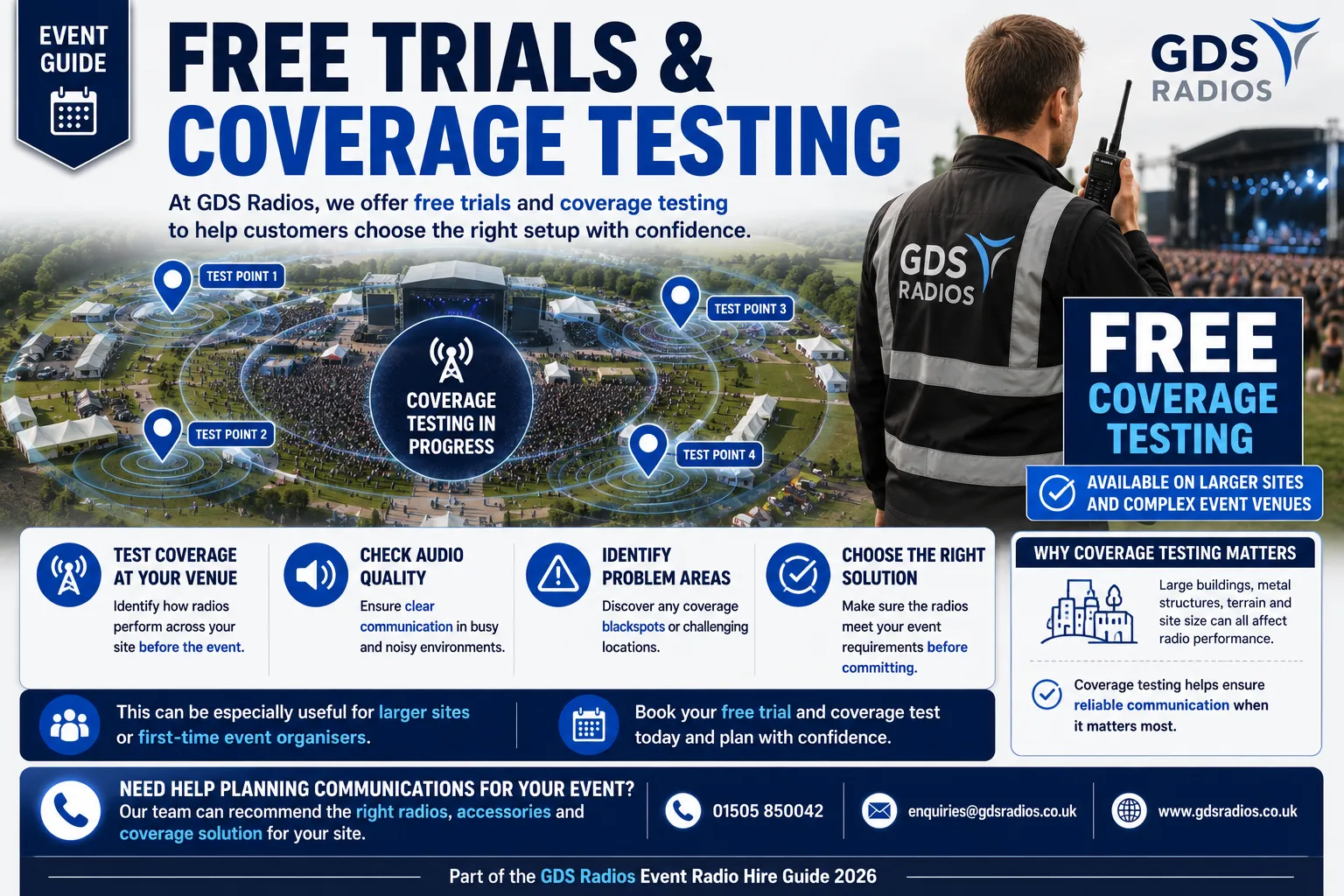
Free Trials & Coverage Testing
At GDS Radios, we offer free trials and coverage testing to help customers choose the right setup with confidence.
This allows you to:
- Test coverage at your venue
- Check audio quality
- Identify any problem areas
- Ensure the radios suit your event requirements
This can be especially useful for larger sites or first-time event organisers.
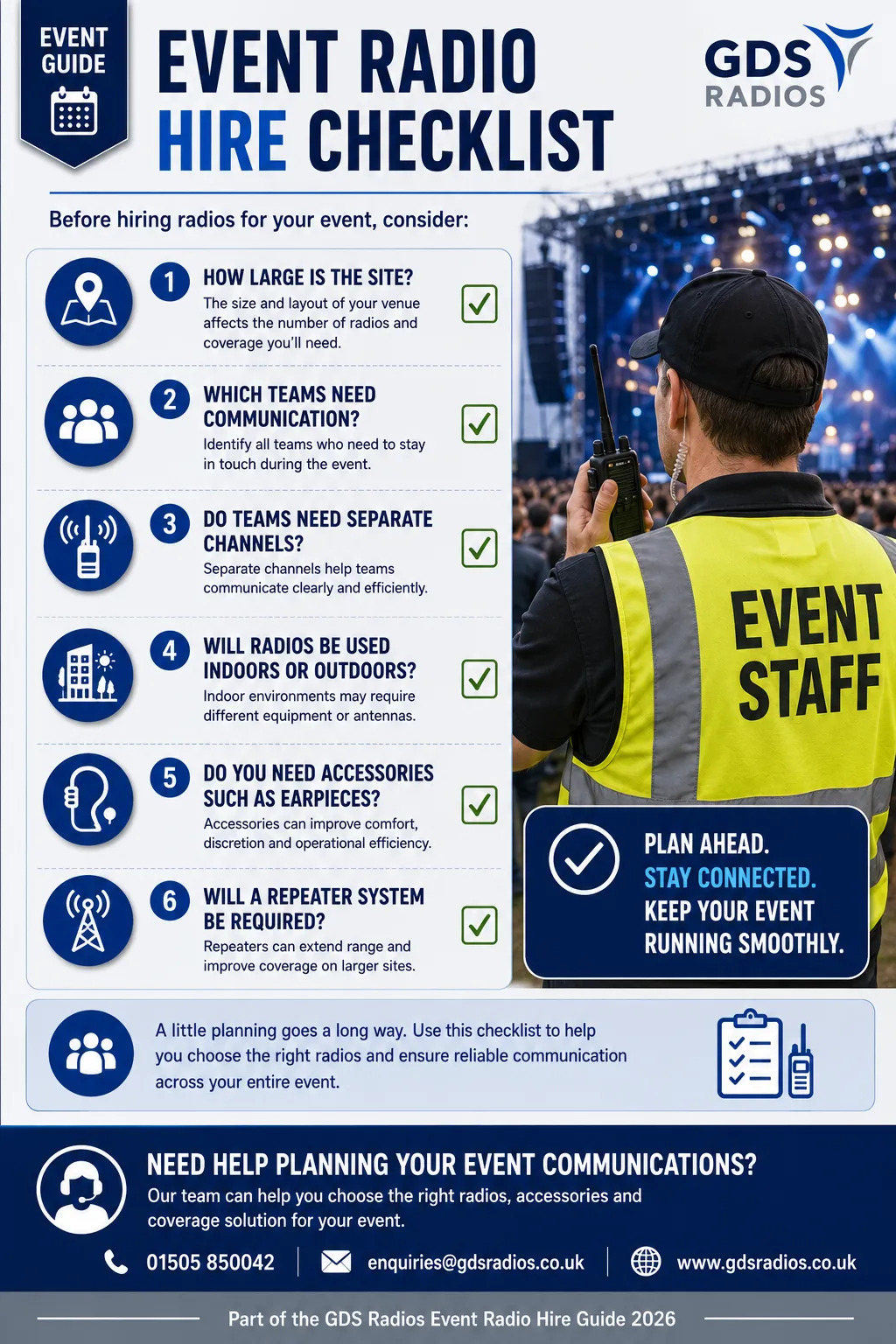
Event Radio Hire Checklist
Before hiring radios for your event, consider:
✅ How large is the site?
✅ Which teams need communication?
✅ Do teams need separate channels?
✅ Will radios be used indoors or outdoors?
✅ Do you need accessories such as earpieces?
✅ Will a repeater system be required?
Need Help Planning Your Event Communication?
Every event is different, and choosing the right setup can make a huge difference on the day.
At GDS Radios, we provide flexible two way radio hire for events across Glasgow and throughout the UK, helping organisers choose reliable communication solutions for projects of every size.
👉 Get in touch today to discuss your event requirements.
Tel: 01505 850042 or email steve@gdsradios.co.uk